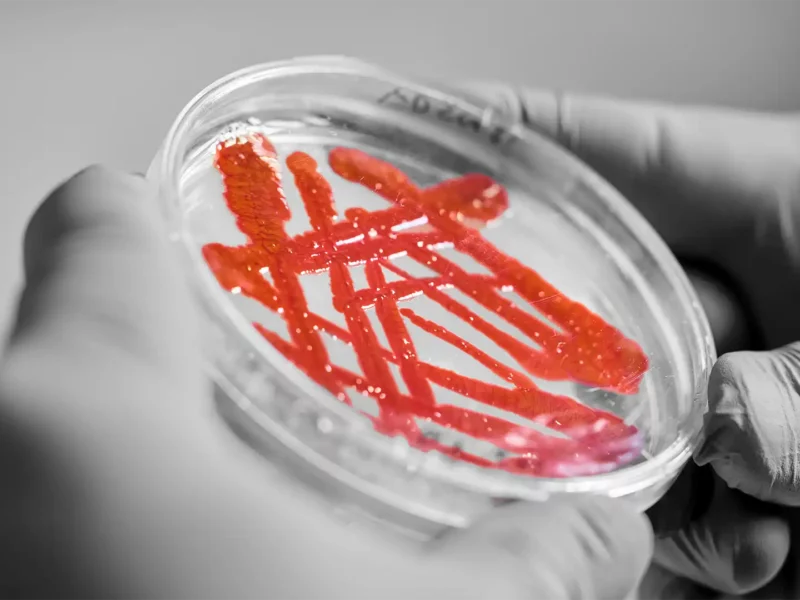
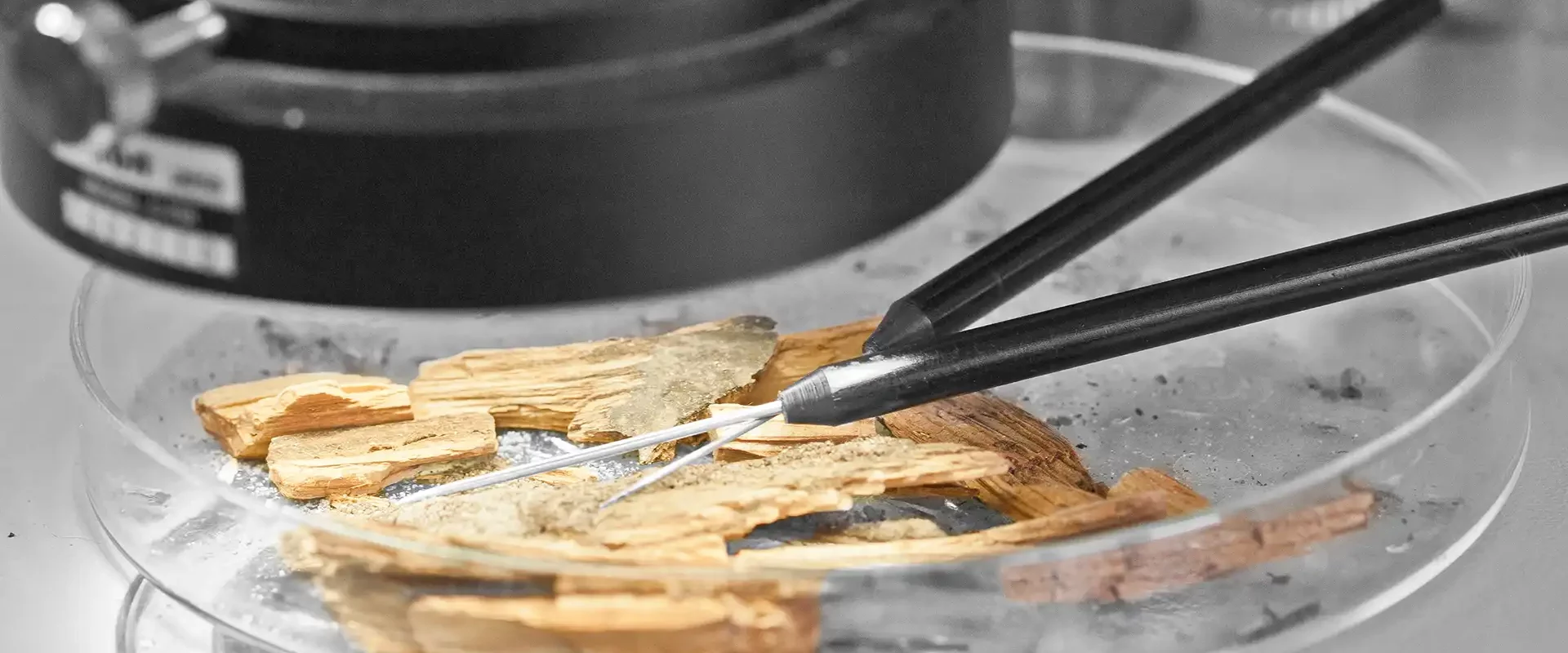
Microscope with a Petri dish: wood fragments probed with fine dissecting needles—microbiological/biological damage analysis, e.g., fungal decay in wood.

Biological Testing

The services provided by the Laboratory Unit Biological Testing, which is accredited according to EN ISO/IEC 17025, include the testing of the efficacy of preservatives and other biocides, the determination of the resistance of materials against microorganisms (e.g. the biological durability of wood, wood-based materials, insulating and coating materials), as well as the testing of the microbial load of material and air samples.

Biological tests are performed either in the laboratory or in the outdoor test field and, if requested, after artificial or natural pre-weathering, pre-leaching, or evaporation exposure to simulate real-world aging and stress conditions.

The proof of microorganisms in the environment encompasses the identification of harmful organisms using microbiological, microscopic, or biomolecular diagnostic methods, as well as the determination of the microbiological (hygienic) load on materials, surfaces, and in ambient indoor air.

Accredited procedures

Current test procedures in the accredited area

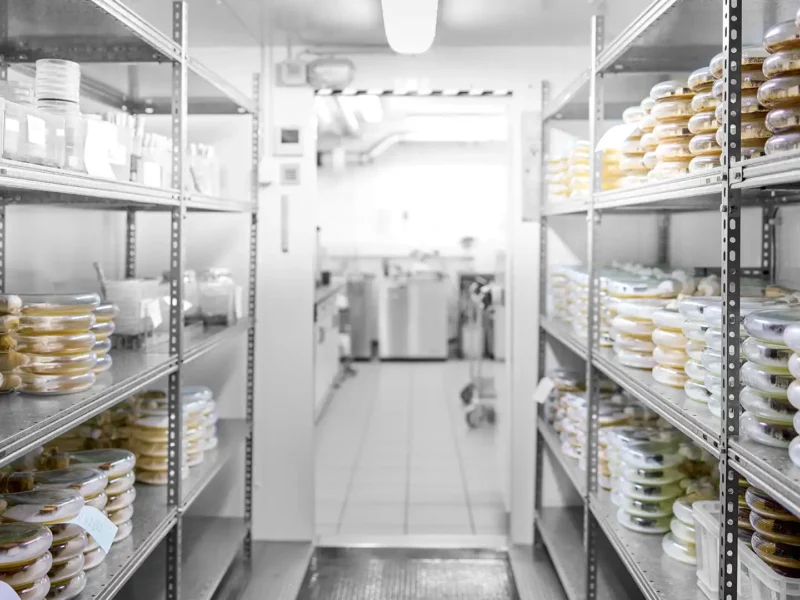
View down a laboratory aisle with metal shelves stacked with petri dishes, prepared for biocide efficacy tests and mould and algae studies.

Testing of biocidal effectivenessTesting of biocidal effectiveness

Fungicidal effectiveness of wood preserving agents

  • Preventive effectiveness against wood-destroying basidiomycetes, soft rot micro-fungi and blue-stain fungi
  • Effectiveness of dry-rot sealing agents
  • Outdoor testing (e.g., effectiveness of wood preservatives in soil contact, double-layer test)
  • Screenings of test substances (e.g., agar diffusion test)

Antimicrobial effectiveness of film protection and in-can preservatives

  • Preventive effectiveness against mould, algae and bacteria acc. to standard procedures
  • Screening tests

Natural and artificial weather exposure prior to biological testing

  • Outdoor weather exposure
  • Artificial weather exposure in the QUV or Xenon test unit
  • Evaporative ageing procedure in the wind tunnel
  • Leaching procedure
Dipl.-Ing. Kordula Jacobs
+49 351 4662 208 Send email
Dipl.-Biol. Katharina Plaschkies
+49 351 4662 334 Send email
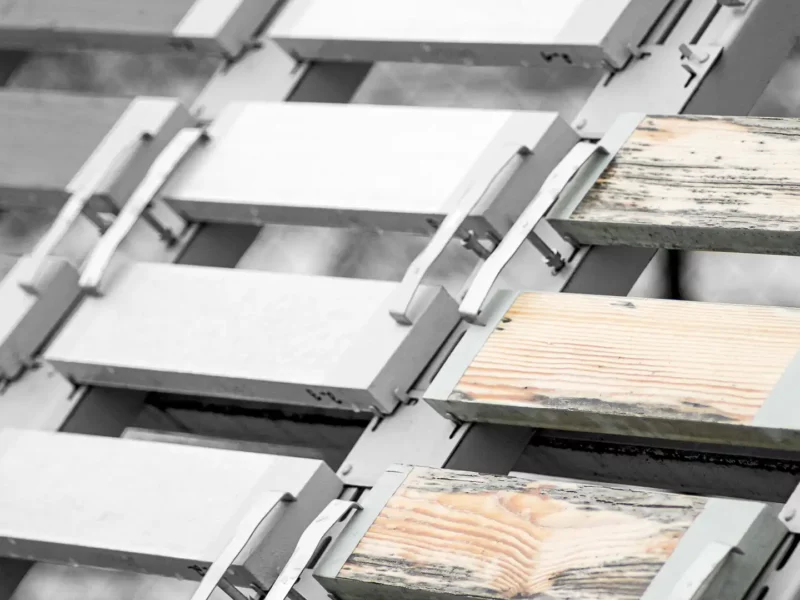
Metal rack holding angled wood panels, some with visible mould and algae growth, in an outdoor weathering test.

Resistance of materials against harmful organismsResistance of materials against harmful organisms

Durability of wood-decay fungi

  • Natural durability of wood and wood-based materials
  • Biological durability of modified timbers and wood-polymer composites (WPC)
  • Laboratory and outdoor testing
  • Resistance against mould, blue-stain fungi, bacteria and algae

Mould testing of insulating materials

  • Mould and algae resistance of coating materials (e.g., lacquers and paints)
  • Antibacterial properties of flooring, textiles and other materials
  • Effectiveness of antibacterial surfaces
  • Hygienic investigations of interior spaces, stores, archives, production facilities, etc.
Dipl.-Ing. Kordula Jacobs
+49 351 4662 208 Send email
Dipl.-Biol. Katharina Plaschkies
+49 351 4662 334 Send email